
Our Specialisms
Cornice Repair & Fibrous Plaster in London
Choice Finishes repairs decorative plasterwork and creates matched mouldings for period interiors across London and the South East. We assess cracks, damaged ornament and missing lengths before deciding how much intervention is needed. From a ceiling rose to the junction between a wall and ceiling, the aim is to preserve sound original detail and make repairs that belong with the surrounding work.
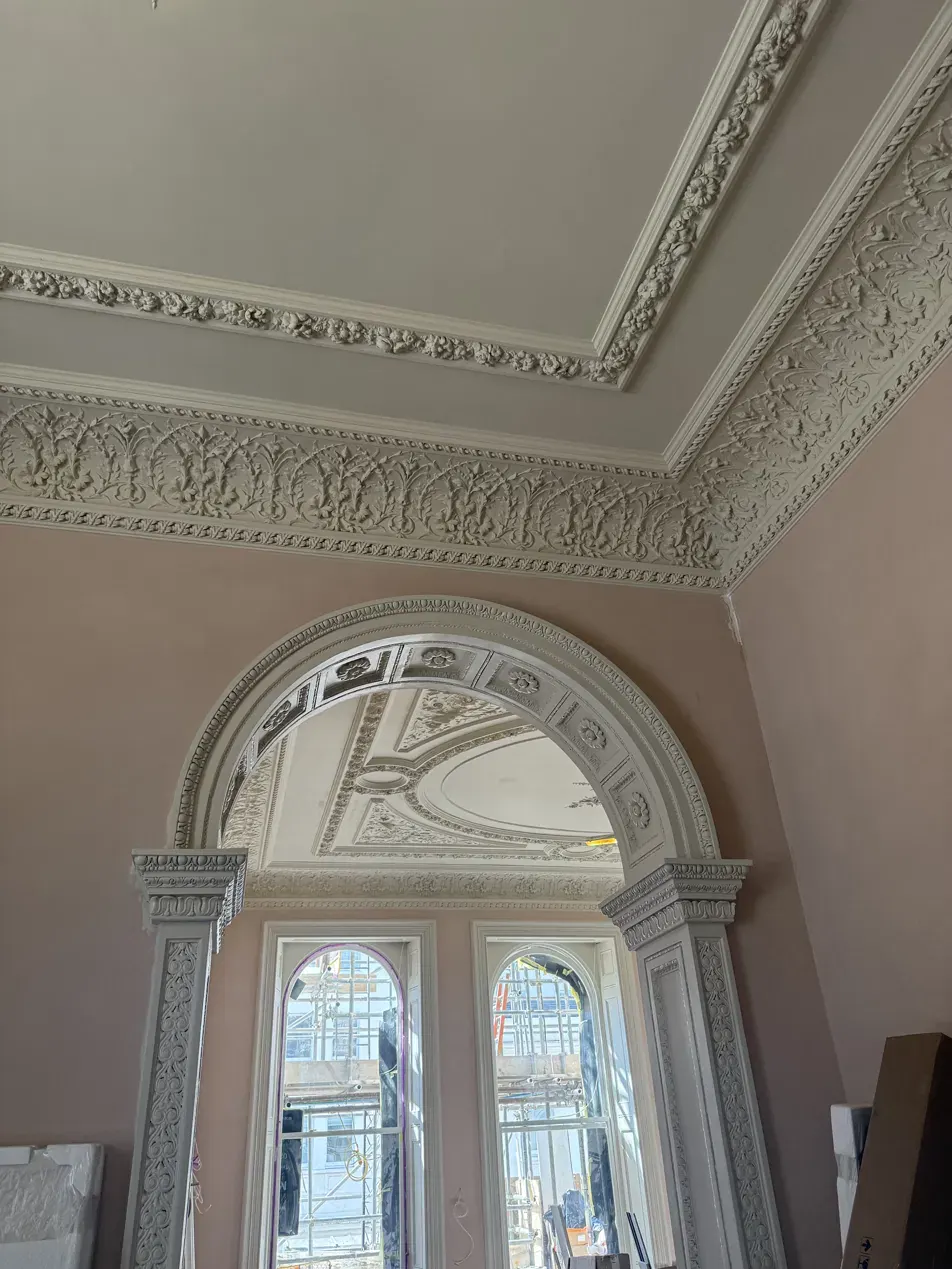
Restoring cornices in period homes
Georgian, Victorian and Edwardian rooms often rely on cornices to give the ceiling its proportions. A missing corner or an uneven repair can interrupt that line even when the rest of the room has been redecorated. We examine the profile, its relationship to nearby ornament and the condition of the background, rather than treating every damaged section as a reason to replace the whole cornice.
Fine cracks may be local defects, but they can also indicate movement or separation from the supporting plaster. Water damage needs particular care: the leak must be resolved and the stability of the affected work checked before repairs are closed up. Loose, sagging or visibly detached ceiling ornament should be assessed before anybody works beneath it; a decorative repair is not a substitute for addressing an unsafe background.
Paint build-up can soften enriched detail and conceal earlier repairs. Where removal is appropriate, we assess the coatings and use a controlled approach that protects the underlying ornament. Older decorative surfaces may contain hazardous coatings, so preparation should account for that possibility. The intention is to recover legible detail without unnecessary stripping or damage to surviving plaster.
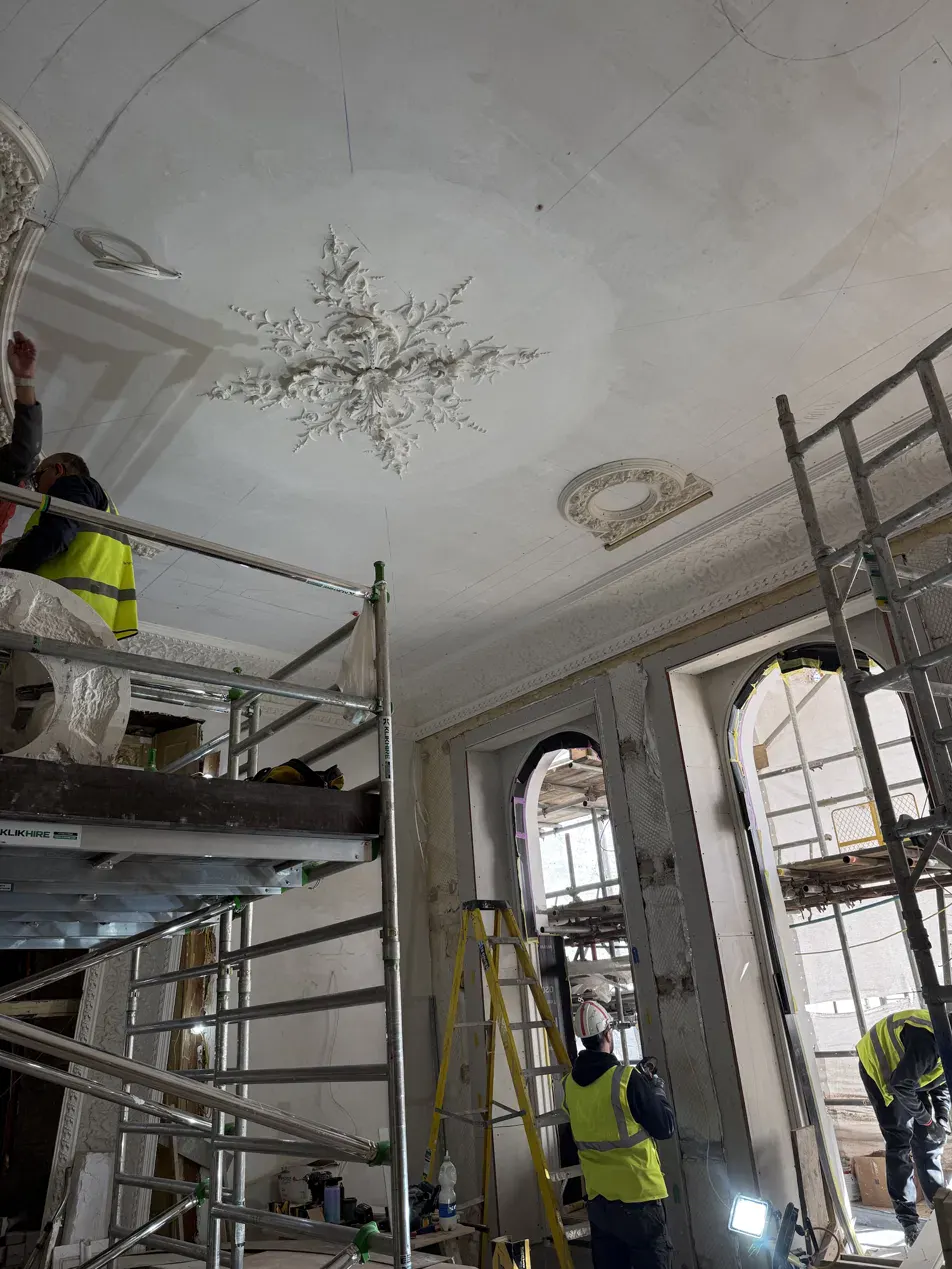
Matching the existing profile
Matching begins with a sound reference section. We may take a profile template or, where suitable for the ornament and its condition, a squeeze or mould from the existing work. Those records help establish projection, depth and the sequence of curves. A nearby similar cornice is not automatically the same pattern, particularly where earlier alterations have changed one side of a room.
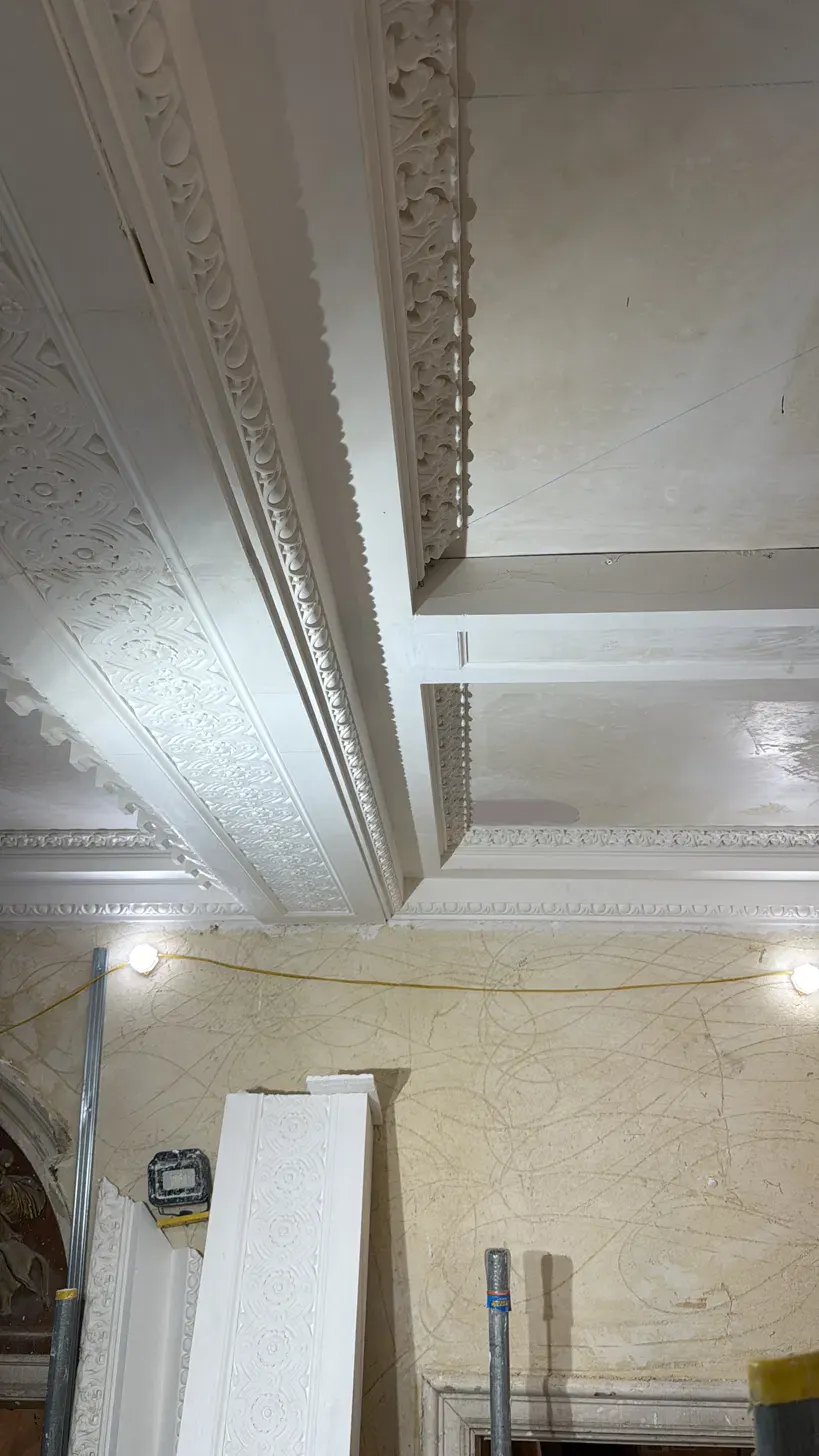
Plain profiles can be run in situ, with a shaped template guiding successive applications along the wall and ceiling junction. Alternatively, new lengths can be prepared in the workshop and fitted on site. The choice depends on access, the background, the profile and the extent of replacement. Enriched details may need separate moulding and casting rather than being produced by a plain running template.
New work is fitted to the retained lengths, with mitres, joints and small gaps made good so the profile reads continuously. We consider surrounding plaster repairs at the same time: a carefully matched length will still look wrong if its junction is buried beneath an uneven wall repair. Decoration follows once the materials have dried sufficiently and the agreed preparation is complete.
Fibrous plasterwork and ceiling ornament
Fibrous plaster uses reinforcement within cast plaster elements, allowing ornamental shapes to be formed and installed as sections. Our work includes cornices, ceiling roses, corbels and panel mouldings, alongside repairs to existing fibrous work. Each piece needs a suitable background and an appropriate fixing arrangement; surface filling alone cannot resolve a failing support.
For a damaged ceiling rose, we look at the surviving pattern, the surrounding ceiling and the proposed lighting position before agreeing the repair. Electrical alterations belong with a competent electrician and should be coordinated before finishing. Corbels and panel mouldings also need careful alignment, so the repair respects the room's existing spacing rather than introducing a visually isolated new piece.
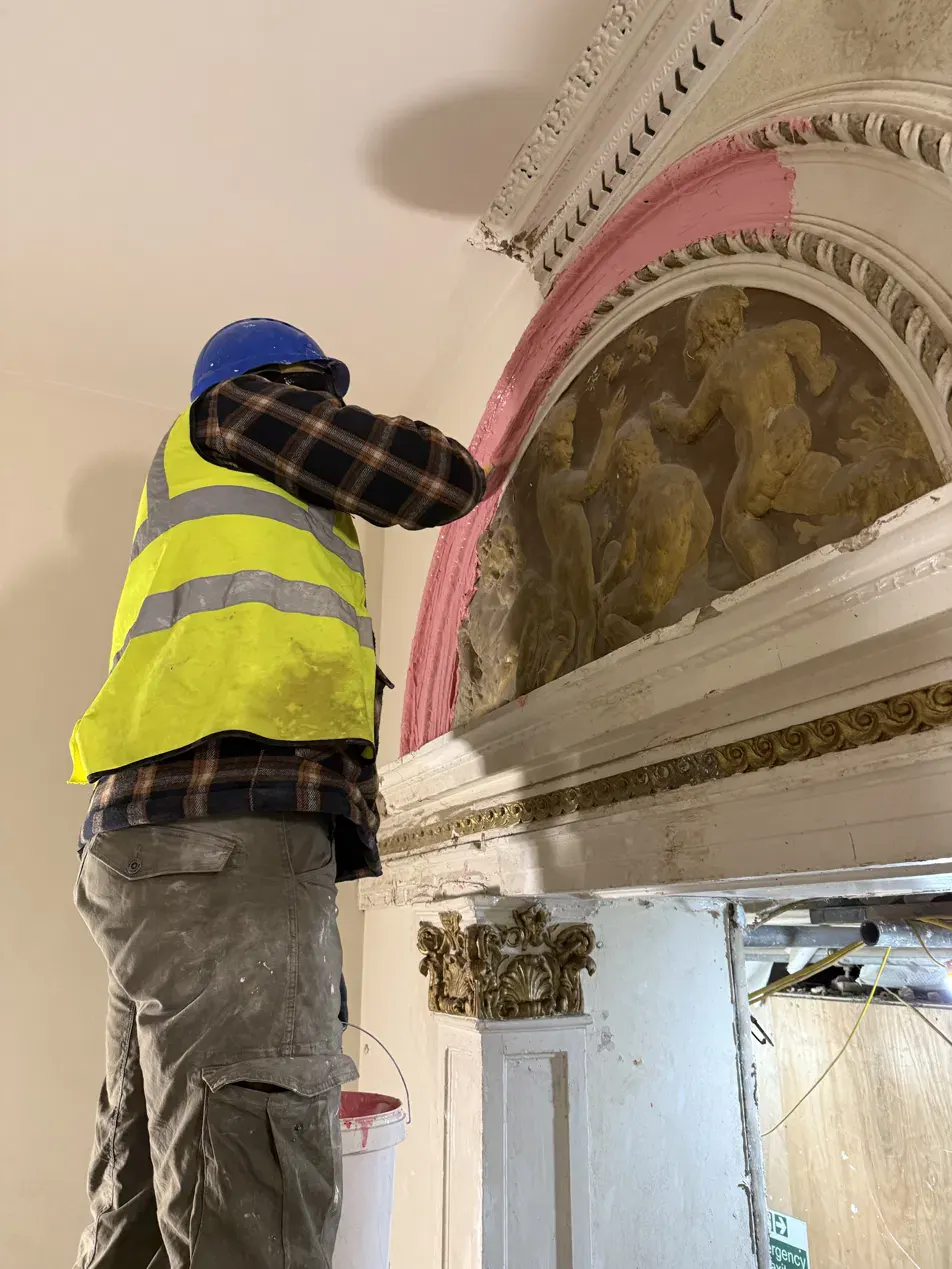
Traditional materials and compatible repairs
Period properties can combine lime wall plaster, lath ceilings, later gypsum patches and fibrous ornament. These materials perform different roles, so there is no single mix suitable for every repair. Our lime plastering content explains why compatible, vapour-permeable repairs can matter on older solid walls. The final decoration also influences how a wall dries.
We retain sound historic material where practical and assess the background before choosing replacement coats or fixing methods. Lime does not solve a leak, and a fibrous moulding is not a waterproofing treatment. If moisture, movement or an unstable ceiling is involved, that issue needs to be understood as part of the specification rather than concealed behind new ornament.
From survey to a clean finish
The process starts with a site visit to assess damage, access and the extent of retained plasterwork. Photographs and drawings are useful beforehand, particularly where you have an architect's specification or conservation requirements. We then agree the repair approach and prepare a sample or profile match where needed before committing to new lengths or cast pieces.
Floors, fittings and access routes are protected before the work begins. Repairs, fitting and making good are sequenced with adjacent plastering and other trades. After allowing for the material's drying requirements, we leave the repaired surfaces clean and ready for the agreed decorating preparation. The quotation should distinguish plasterwork from any separate painting or electrical work.
London and South East coverage
We cover prime central and North London, including Mayfair, Kensington, Chelsea, Bayswater, Marylebone, Hampstead, Highgate and Finchley. We also discuss projects across the South East. Share the location, approximate scope and access restrictions so that the first conversation addresses the practical requirements of your property.
Related finishes
Restored ornament can sit alongside contemporary interior surfaces without losing its character. Explore polished plaster for the wider range, Venetian plaster for layered, burnished effects, or Marmorino for a softer mineral appearance. Junctions and sample choices should be considered together so the decorative finish complements the retained mouldings.
Get in Touch
Discuss your cornice or plasterwork
Tell us about the existing detail and what you need repaired or matched.
Call 07854 393865 for a quoteFrequently Asked Questions
We assess a surviving section and take a profile or mould where appropriate. That reference guides new lengths and details. The method depends on the pattern, access and condition; photographs help initially, but the match is established against the actual plasterwork.
Yes. We assess damaged or missing ornament, the ceiling background and existing support before choosing a repair. Any water source or unstable fixing needs attention first, and lighting alterations should be coordinated with an electrician.
Fibrous elements are cast with reinforcement and fitted as pieces. Run-in-situ work is formed directly on the building using a shaped template. Both can produce cornices; profile, background and access determine which method suits the repair.
Yes, subject to the agreed specification and necessary permissions. Internal plaster and ornament may be protected. Confirm consent requirements with your adviser or local authority and share the conditions before work starts; listing does not automatically allow like-for-like removal.