
Our Specialisms
Damp Proofing London
Damp marks are a symptom, not a diagnosis. Choice Finishes investigates moisture in London homes before recommending work, distinguishing rising damp from leaks, rain penetration and condensation. We identify what the building and the evidence suggest, explain the options, then carry out appropriate repairs and plastering. Where an injected damp-proof course is justified, it is considered as one possible part of the solution—not a default treatment. Our work includes salt-contaminated plaster removal, compatible replastering and breathable lime finishes for period properties.
Types of damp we treat
Rising damp is moisture moving up through masonry from the ground. Low-level marks prompt investigation but do not prove it; salts, leaks and ground levels can look similar.
Penetrating damp is water entering through the building envelope. Defective pointing, render, gutters, roofs or openings may let rain in. Replastering alone cannot stop the entry.
Condensation forms when indoor moisture meets a cold surface. Ventilation, heating and insulation can contribute; it may coexist with other defects and needs distinguishing from water entering through the fabric.
Why we diagnose the cause first
- Moisture pattern considered alongside the building's construction and condition.
- Possible sources: ground moisture, rain entry, plumbing leaks, ventilation and condensation.
- Whether plaster is salt-affected, unsound or suitable to retain.
- Compatibility of repairs and finishes with period or solid-wall construction.
- Whether a damp-proof course, another repair or further investigation is appropriate.
Choice Finishes
Get a quote for your project
Send us your brief and we can advise on the right system, finish and next steps.
Our process
We explain the diagnosis and scope before work starts. Treatment follows the cause and condition of the wall.
Survey
Review symptoms, construction and relevant history on site.
Diagnose
Consider moisture sources and explain when further investigation is needed.
Fix the cause
Agree the cause-related repair and any specialist work needed before plastering begins.
Strip
Remove salt-contaminated or unsound plaster where inspection shows it is necessary.
Treat
Carry out the specified treatment, including an injected course only where appropriate.
Replaster
Apply a compatible plaster build-up, using breathable lime where the construction requires it.
Finish
Complete the surface and advise on suitable decoration and drying before painting.
Choice Finishes
Talk to us about your specification
We work with homeowners, architects, designers and contractors across London.
Damp in period homes: why lime matters
Many older London houses have solid walls that manage moisture differently from modern cavity construction. Dense cement or unsuitable gypsum finishes can restrict drying; a compatible lime plaster allows moisture to evaporate and helps the wall dry out.
Lime does not repair a leak or suit every wall. We consider the fabric and moisture source before recommending a build-up. See lime plastering in London.
Salt-contaminated plaster and injected damp-proof courses
Moisture can carry salts into plaster. If it is contaminated or unsound, we agree what to remove, prepare the substrate and replaster to suit the wall. Scope depends on site conditions, not a photograph.
An injected damp-proof course may suit a wall where evidence supports rising damp. It will not resolve rain, condensation or a plumbing leak, so we consider it only when diagnosis supports it.
Basements and cellars
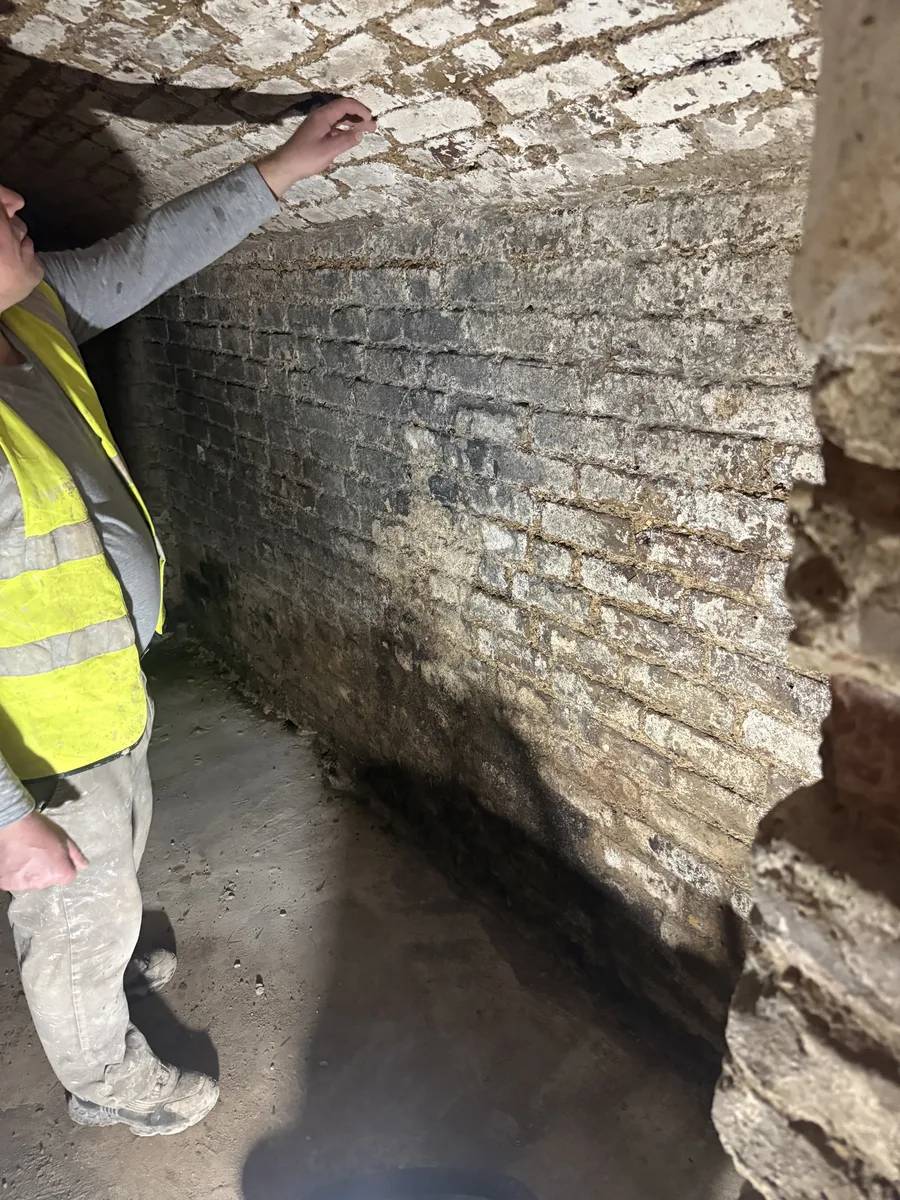
Below-ground rooms need an approach suited to water pressure, structure and intended use. A cellar may need waterproofing rather than an injected course or plaster-only repair. Read about basement tanking; a survey establishes whether a tanking or drained system is relevant.
Where we work
We undertake damp investigation and associated plastering across London, including:
- North London — Finchley, Barnet, Highgate, Hampstead, Muswell Hill, Islington and Hackney.
- West London — Kensington, Chelsea, Fulham, Hammersmith, Notting Hill and Ealing.
- South London — Clapham, Balham and Wandsworth.
A site survey helps establish the building and scope.
How damp proofing is priced
Cost depends on cause, area, access, plaster removal and finish. We price after a site survey and agreed scope.
Frequently Asked Questions
Answers to common questions we hear from clients, architects, and designers.
Low-level marks do not prove rising damp; leaks, penetrating water and salts can look similar. We consider the wall and possible sources before recommending treatment.
Not always. Salt-contaminated or unsound plaster may need removal. We agree the extent after inspection; sound plaster does not automatically need stripping.
It can suit some traditional solid walls, but does not fix the source and is not right for every background. We consider construction and cause before specifying lime.
Below-ground ingress may need waterproofing rather than a damp-proof course or plaster repair. See our basement tanking service; the system depends on structure and use.
Cost depends on diagnosis, area, access, removal and finish. We price after a survey and agreed scope.
Related Specialisms
Our Specialisms
Tanking & Waterproofing
Basement tanking and below-ground waterproofing systems.
Learn moreOur Specialisms
Lime Plastering
Traditional lime plaster restoration for heritage and listed buildings.
Learn moreOur Specialisms
External Rendering
Sand and cement, lime, silicone and monocouche render for heritage buildings, refurbishments and new builds.
Learn moreGet in Touch
Arrange a damp survey
Tell us what you have noticed and where. We will discuss a survey and next steps. Call +44 7854 393865 or email choicefinishesltd@gmail.com.
Discuss damp in your home