
Our Specialisms
Cornice Restoration & Repair
in London
Matched cornice repairs, replica cornice runs, ceiling roses and enriched plasterwork for period and listed properties — moulded from your original detail, cast in fibrous plaster and fitted so the repair reads as part of the room.
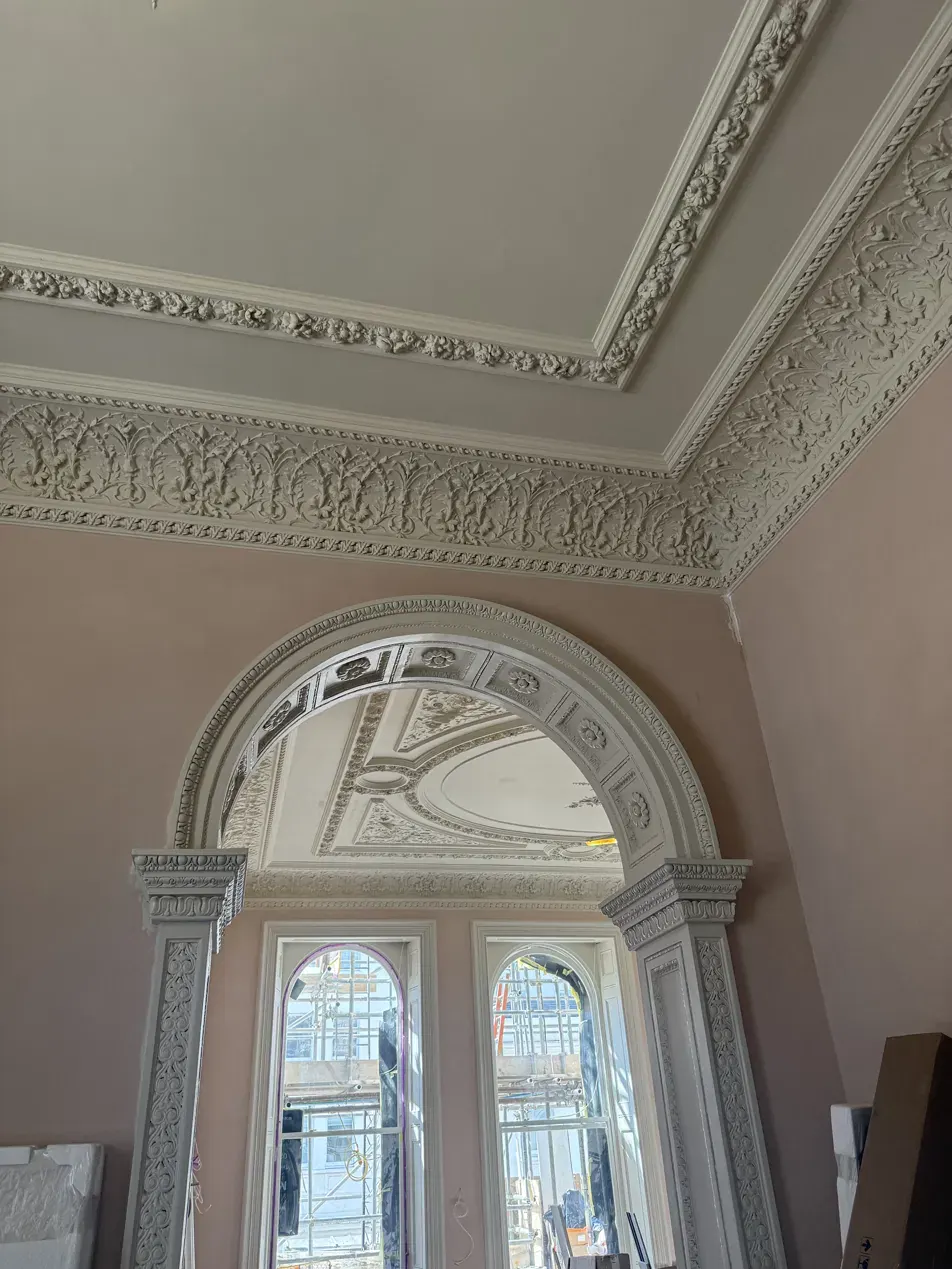
Why period cornices need specialist repair
Plaster cornices, ceiling roses and enrichments are among the most distinctive features of Georgian, Regency, Victorian and Edwardian rooms — and among the most easily damaged. We are usually called in after:
- Water damage from a leak, bath overflow or roof failure
- Structural movement, cracking or sagging ceilings
- Rewiring, plumbing or new downlights cut through original work
- Walls removed or rooms reconfigured, leaving gaps in a run
- Earlier repairs in the wrong profile or filled with paint, so detail has been lost
A good cornice repair should be invisible. That means matching the exact profile, the depth of enrichment and the way the original sits against wall and ceiling — not choosing the nearest stock moulding from a catalogue.
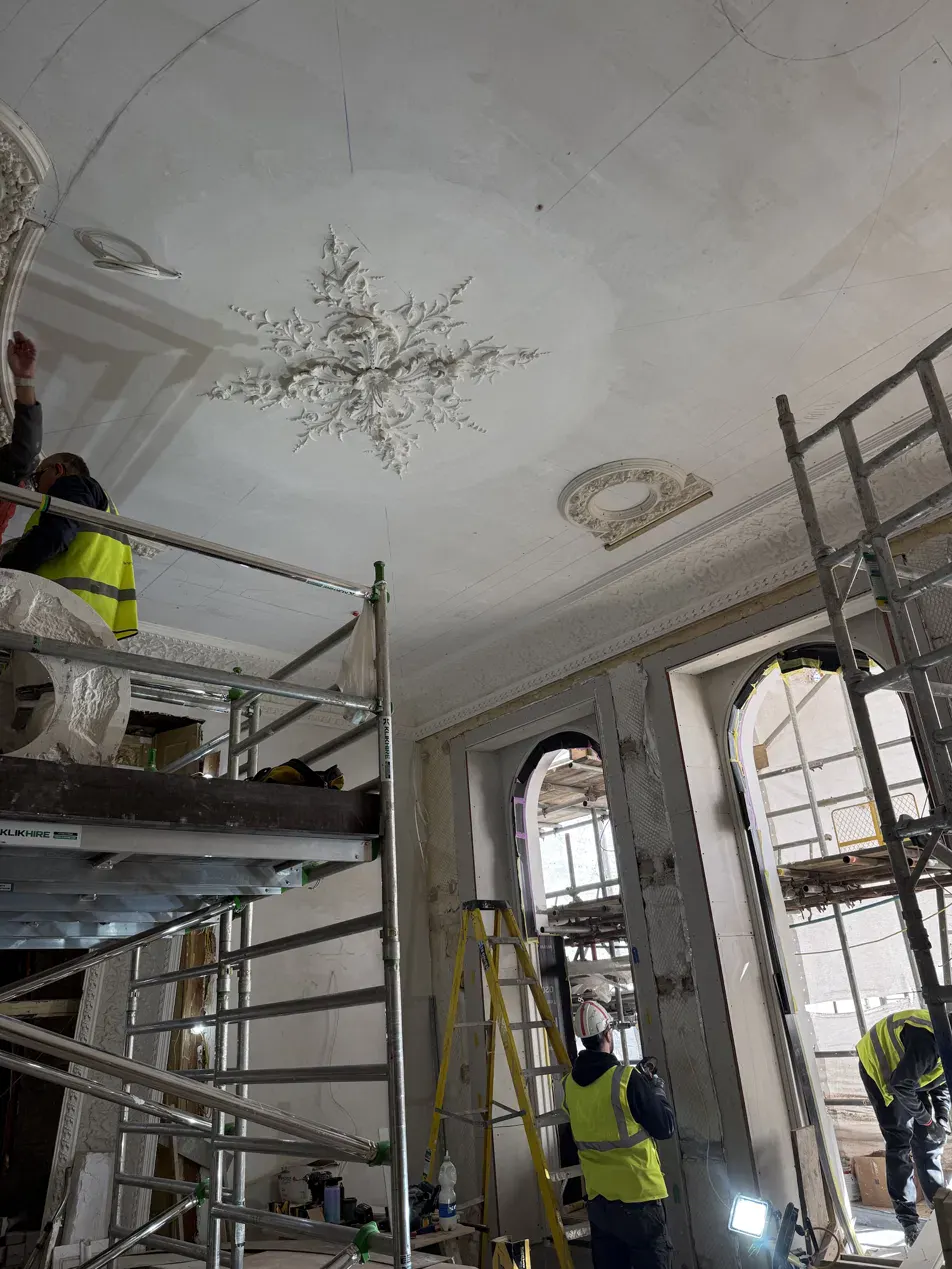
Fibrous plaster: how replacement sections are made
Fibrous plaster is plaster cast in a mould and reinforced with hessian scrim and timber laths. It was developed in the nineteenth century and is how much of London's period ornament was originally made. It is light, strong and capable of very fine detail. Our process:
Survey
record profiles, damage, access and the extent of missing ornament.
Moulds
take moulds from sound original work, or make new patterns from approved drawings.
Casting
cast and check fibrous sections in the workshop before they come to site.
Installation
fix, join, make good and finish the new work into the surviving plaster.
See our fibrous plastering page for new decorative schemes as well as repairs.
Choice Finishes
Get a quote for your restoration
Send us photographs or arrange a survey so we can understand the existing detail and condition.
Restoring complete decorative schemes
Period rooms often combine several elements — cornice, frieze, ceiling rose, panel mouldings, pilasters, capitals, coffered soffits and enriched arches. These need to align in scale and relief for the room to feel coherent, so we treat them as one restoration package and coordinate with architects, heritage consultants and conservation officers where listed building consent applies.
At Lancaster Gate, moulds were taken directly from surviving original profiles and figurative reliefs, new sections cast to match, and enrichment, cornices, ceiling roses and archways restored throughout the building — alongside 4,000m² of lime plastering.
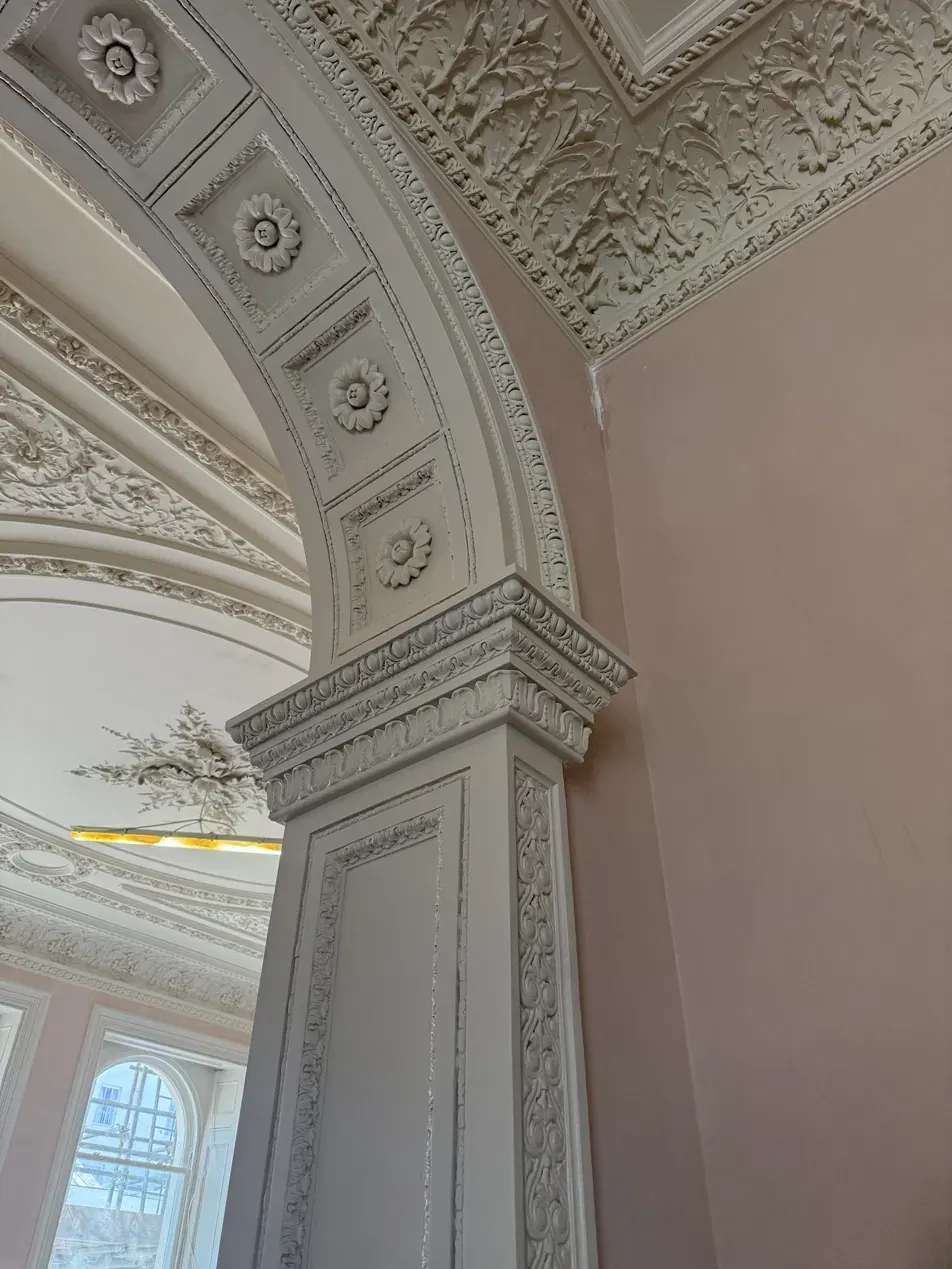
Cornice repair and replication
Matching an existing cornice. Wherever sound original detail survives, we take a mould directly from it. New lengths are cast from that mould, so the profile and ornament match precisely. Joints are made good and finished by hand into the surviving plaster.
Replicating a missing cornice. Where a room has lost its cornice altogether, we can reproduce one from a surviving section elsewhere in the house, from neighbouring properties of the same period, or from architect's drawings and references approved by the conservation officer.
Run-in-situ and cast work. Plain profiles can be run in place with a profiled template; enriched work — egg and dart, acanthus, dentils, modillions — is cast in the workshop as fibrous plaster and fixed on site.
Cleaning and paint removal. Many cornices have lost their crispness under decades of paint. Where appropriate we can clean back clogged detail before repairing.
Ceiling rose restoration
Ceiling roses are often the first thing damaged when lights are changed. We repair cracked or partly missing roses, recast lost sections from surviving parts, and supply replica roses matched to the room's period and scale. A rose and cornice in the same room should feel like a set, so we look at both together.
Cornice work in listed buildings
In a listed building, repairs to historic plasterwork can require listed building consent, and conservation officers generally expect like-for-like materials and the retention of as much original fabric as possible. We repair rather than replace wherever we can, and use lime-compatible materials when working into lime-plastered walls and ceilings. See heritage lime plastering.
Where we work
We restore cornices across London — including Kensington, Chelsea, Belgravia, Notting Hill, Holland Park, Hampstead, St John's Wood and Marylebone — and in period homes across the South East and Buckinghamshire.
Choice Finishes
Not sure how to match the original? Ask us.
We can advise on moulds, replacement sections and a conservation-led repair approach.
Related Specialisms
Frequently Asked Questions
Answers to common questions we hear from clients, architects, and designers.
Yes. Wherever sound original detail survives, we take a mould directly from it and cast new sections from that mould, so the profile and enrichment match the original. The joints are then made good by hand so the repair is not visible.
Get in Touch
Not sure how to match the original? Ask us.
Send photographs of the damaged and surviving sections, with a rough length of the run, and we will advise on the repair approach. Call +44 7854 393865 or email choicefinishesltd@gmail.com.
Send us photos